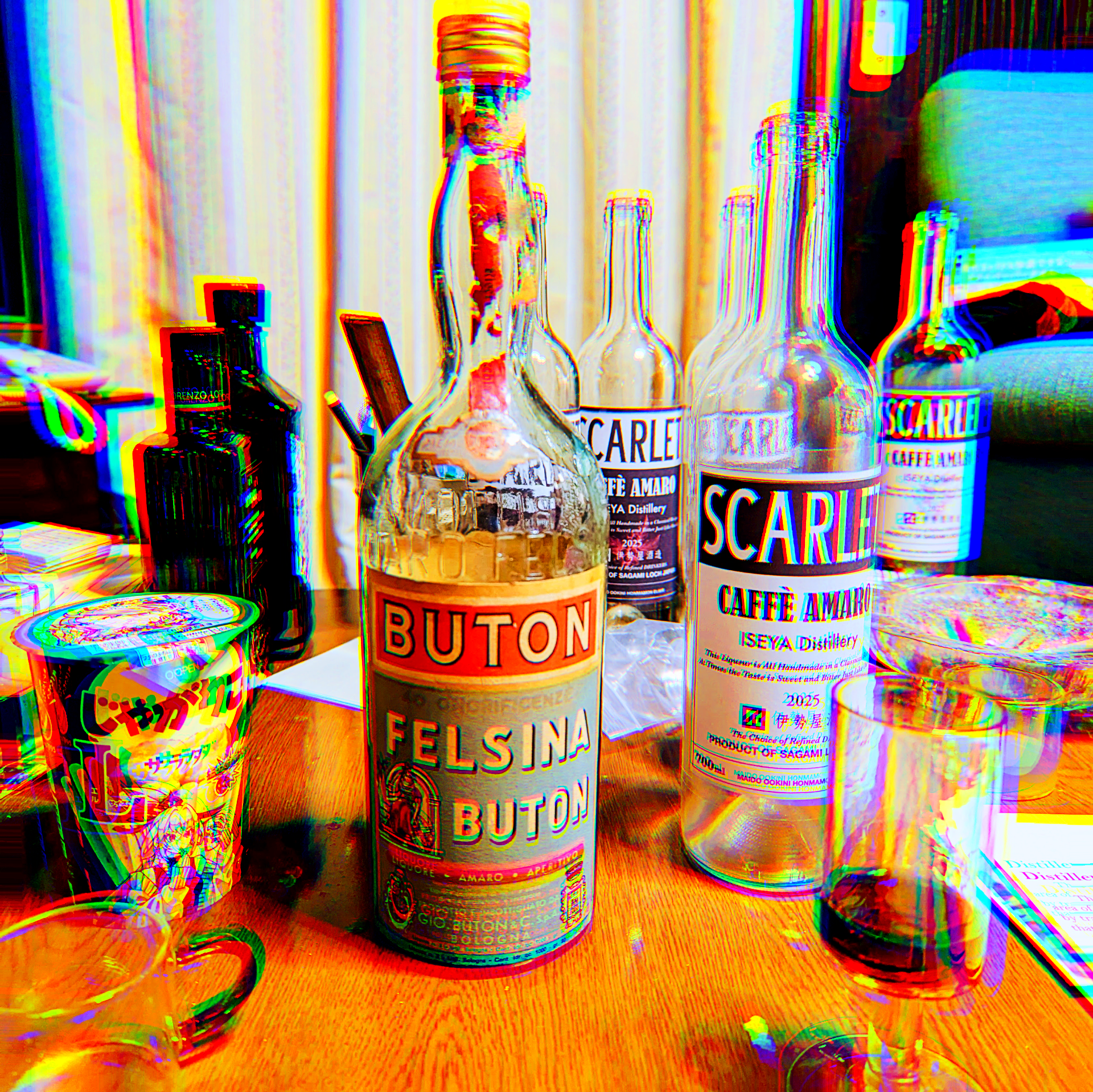
The farmhouse windows are fogged out on this icy January afternoon, and the Sagami River snakes in silence somewhere outside in the soup. This space, as much garage as living room, is ragged and worn as I feel right now, and between the ancient tools and the cubbyful of shoes, it’d be hard to place exactly what era I’m in if not for the articles spread out on the chabudai table.
Kneeling on creaky knees, I scribble away in my notepad alongside an unopened cup of instant noodles, a tray of stubbed-out cigarettes, and a few empty bottles, pausing only to hug my mug for warmth as my gracious host fills it to the brim with one of the few words I actually know in this language: ocha.
Of course, I didn’t travel all the way to Japan for green tea. From a miserable middle seat across the Pacific along the octopus alleyways of Kōenji to the sacred shadow of Mount Takao all the way to this sleepy lakeside village in Kanagawa Prefecture, I was there to write a profile on Japan’s first and only amaro producer. Or so I thought.
Now, after fourteen anguishing months of writer’s block, it only now dawns on me that I wasn’t really there for the amaro, either, but for a taste of Japan’s mythical ikigai. Whatever the hell that is.
The Origins of Bitter
Gearing up for my first trip to Japan, it was at my neighborhood shoten, Oakland’s Umami Mart, where I first sipped Iseya Distillery’s aperitivo.
Darker and more viscous than Campari, if it wasn’t quite strong or bitter enough to consider to be a proper amaro, it was intriguing enough to plan an entire trip around. Yet it wasn’t until I got to the Land of the Rising Sun until I learned that, more than Italianite liqueurs or regrettable wartime alliances, Japan had far more in common with Italy than I had realized: it, too, was an expression of a very specific—and freshly delusional—American Dream.
Not unlike the purported birthplace of amaro, however flimsy that claim may be, rural Japan has suffered from a profound decline in population in recent years, leaving as many as 9 million homes abandoned as of 2024. And, just as not-unlike the aforereferenced, boot-shaped peninsula, where the 1 Euro Home movement was first launched in 2008 in an attempt to stop that brain drain, Japan has also attempted to redirect the dreams of overworked youth from city to country. With an outback increasingly abandoned by a generation of Japanese farmers now wandering in the yomi-no-kuni (roughly translating to “the land where the amaro don’t flow no more”), it was a scheme that made all too much sense.
But was it working?
To answer that question, I would need to either 1) pore over reams of the existing data on the subject with journalistic impartiality, or 2) fly thousands of miles to meet an actual Japanese person living out that Motherfucking Dream.
The choice was obvious.
As an uninitiated, ever-disillusioned 外国人 fresh off of a low-cost, transcontinental redeye, it’s hard to truly prepare yourself for the concrete verticality that awaits you in Tokyo. Near the main station, at least, the metropolis fits the expectation so many of us have for the place, playing the part of the hyper-modern, supersonic city stacked upon itself, metal and glass all but blotting out the sky while businessmen in black suits squeeze themselves into one train after another in the dark-yet-pristine underground.
In a way, I’d hoped that Tokyo would stand as proof that this exhausting, never-ending hustle wasn’t unique to my home, that somehow, there was another place that rivaled us in malaise spawned by bullshit jobs, digital disassociation, and the widespread withering of one’s dreams.
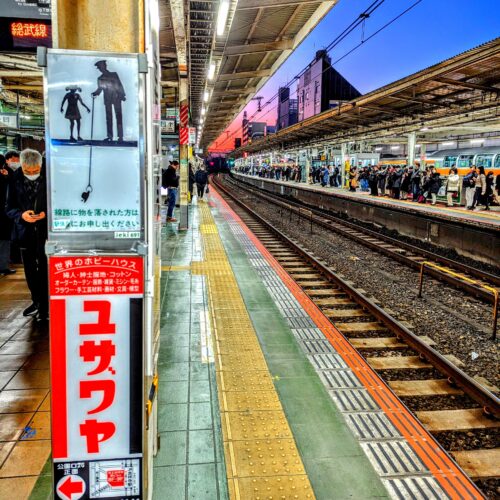
Worming my way for a spot among the bleary-eyed commuters, my soggy backpack dangling between my legs with elbows in every orifice, I’m almost relieved to be so immersed in the madness: American exceptionalism be damned! It is every bit as draining as they say it is. Like seemingly everyone around me, I stare nervously at the clock, mortified by both the prospect of being late for my destination and making eye contact with the old lady with pancake makeup and lacy dress whose look might be best described as Victorian England Toddler.
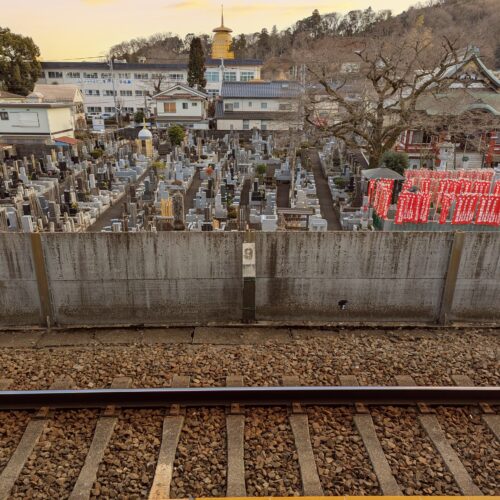
By the time I reach my transfer station in Takao, however, I share the train with the scariest company of all: nothing but my own thoughts. You’re late, you poor idiot! my inner voice screams over the silence. Why are you always so late? How hard is it to catch three connecting trains in a foreign country? it continues as the subway doors slide open, revealing an ancient cemetery waiting right alongside the tracks. A bit on the nose, cemetery.
At The Shuzo

Hardly ninety minutes from Tokyo’s claustrophobic madness, Sagamiko is somehow even more barren than that cemetery block, with nary a soul in sight despite a train station that looks like it was opened yesterday and a tourist-friendly neon archway—complete with the white silhouette of a fishing boat—welcoming me to my afternoon.
It’s a long walk through past the piddling cluster of dead village bodegas up through this cold riverside mist, which insists on reminding my lower back that I’m about to turn 40 and still can’t afford health insurance. Shut up, mist.

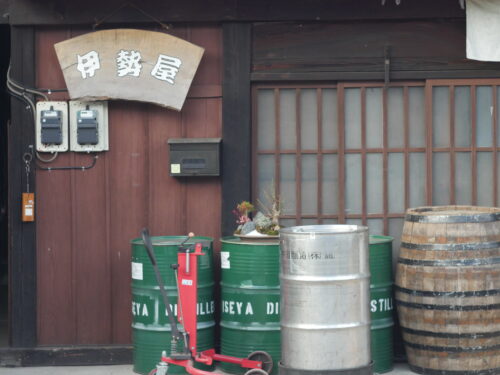
Following my phone to one of many shuttered, wood-paneled residences along the winding Koshu-Kaido Road, there’s little indication that you’ve arrived at the Iseya Shuzo but for a modest wooden sign with 伊勢屋 (Iseya) carved in white letters and a few empty barrels among the hedges.
Soon, an elderly lady emerges, broom in hand. She acknowledges my existence with an almost-imperceptible nod before retreating into the compound and returning, having morphed into a much younger, more goateed person.
Tatsuya Motonaga certainly doesn’t look like your typical farmer. Dressed smartly in horn-rimmed glasses and a corduroy-collared overcoat, his hair parted right down the middle, Moto (who readily expresses his love for A Tribe Called Quest) could’ve just as easily been at home behind a vintage 4-track at some Brooklyn art gallery.
苦難の道
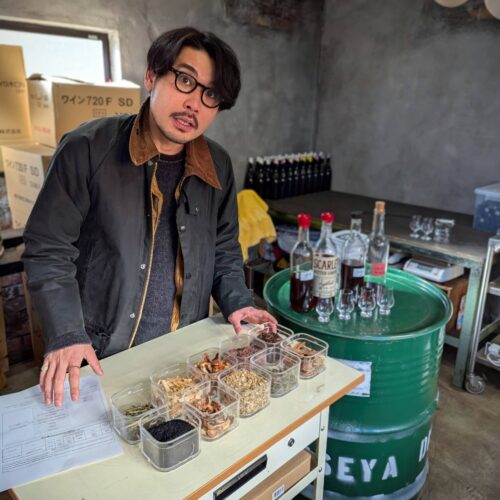
In truth, Moto never seemed destined for the countryside. From his early twenties, when the Osaka native first moved to Tokyo, the man seemed to be on track for a life of neon glory, working as a bartender at some of the capital city’s most acclaimed bars, from Caol Ila, Shibuya’s now-shuttered scotch house for collectionists, to Bar Benfiddich, a farm-to-glass fifteen-seater frequently cited among the world’s best where I happened to meet Motonaga a few days prior during the “research” phase of my viaggio in Giappone.
As for Moto’s own journey, well, the way he tells it, it all started with manga.
A self-described おたく (otaku), Moto first began his lifelong obsession with obsessing as a kid swimming in a sea of comics. Over time, however, he managed to break free from his bedroom habit, funneling this singular focus into the realm of whisky. Relatable. In time, though, he showed a particular knack for spirits, and found himself working under such liquor luminaries as Caol Ila’s Masahide Kobayashi and Bar Benfiddich’s Hiroyasu Kayama.
In a patently unotaku-like fashion, Moto would continue his education abroad, flinging Japanese-Tawaianese fusion infusions at Wa-Shu in Taipei, and helping to expand Shingo “SG” Gokan’s global empire of uber-izakayas in Beijing.
It was a career on the upswing—or so it seemed, until that microbial nuisance named COVID-19 began coursing its way through everyone’s olfactory systems, shuttering bar after bar along the way. At a time when the Japanese market on scotch—and Japanese bars named after scotch, apparently—was oversaturated, Moto pivoted again, chasing a burgeoning love of amaro into the European Alps, where he studied the art of maceration at dozens of distilleries, from Switzerland to Germany.
By 2020, with his career on the rocks, fate (or, more precisely, Kobayashi-san, Moto’s longtime boss from Caol Ila) stepped in. If the young man could restore the elder’s crumbling family farmhouse—which had been abandoned for three decades—it was his.
It was an offer, as the saying goes, that Moto couldn’t refuse.
Nevermind the fact that young Osakan knew next-to-nothing of construction, farming, or distillation. With the help of a few local carpenters and more than a few DIY videos on YouTube, Moto set to work reviving the farmhouse and its modest patch of land across the street.
Within a year, the blight was transformed into Japan’s lone amaro house, now turning out thousands of bottles a month with the help of a handful of people, including his mother, his partner, his sister, and her son.
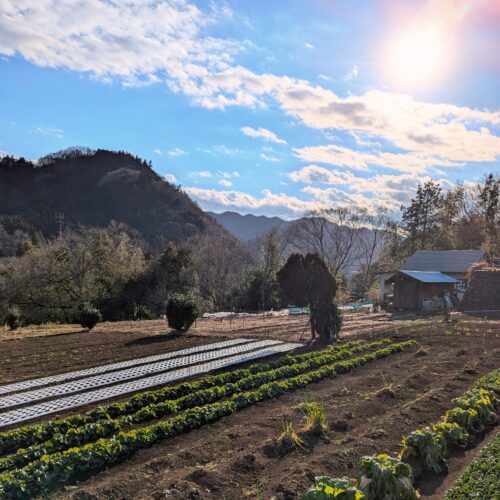
Together, the team approaches the garden each day with minimal intervention, growing local botanicals like pampas grass, mulberry, and Japanese Mugwort (a fragrant, wilder cousin of European Wormwood commonly associated with absinthe).
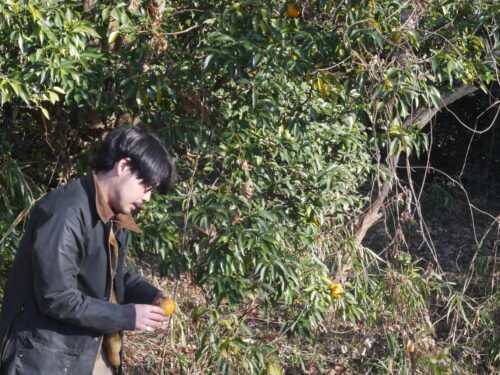
Macerating these in Sakurao vodka alongside imports like Asuha root from the Izu Islands, Vietnamese cacao, and Italian bergamot, then aging each recipe in whiskey casks both domestic and international—from Chichibu, the legendary producer of Ichiro’s Malt whose distillery is located in nearby Seitama to Laphroaig, Scotland’s most high-profile house of peat—Iseya’s infusions bring the world to Lake Sagami, filters it through a local lens, then reintroduces it abroad.
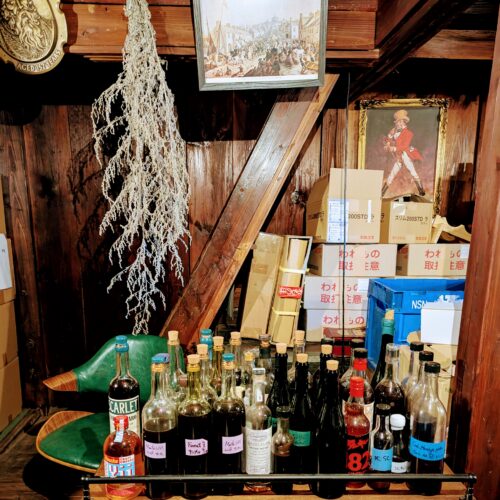
Even as the garden expands a bit more each year, now growing some fifteen botanicals including hyssop, fir trees, rhubarb, and chicory, Iseya remains a small, family-run operation. Still, it’s one Moto hopes will breathe more life into the quiet “Loch”, infusing income into the local economy while continuing to produce his product the old way, without pesticides or artificial flavors.

It might read like a bunch of marketing でたらめ, but upon visiting Iseya’s storehouse at the end of my visit, Moto’s otaku-level commitment to the bit becomes crystal-clear. Pouring with unchecked enthusiasm from an almost-disturbing amount of amaro on display—from his own archive of limited editions to a vast library of vintage and exotic bottles—Moto proves to be a true scholar of the subject, walking me through the ingredients and history contained within each, from 1950s Bologna to my own backyard.
Literally and existentially, the visit leaves me with one of the most challenging hangovers I’ve ever had.
A Solitary Ikigai

Over a year has passed since my brief visit to Sagami Loch, and, having never published this article in a major American magazine, a certain bitter aftertaste continues to linger. Yes, I realize now that it’s neither the amaro nor the farmhouse, but the promise of purpose that has kept the bile in my brain churning and frothing for so many months.
My generation was raised by the words of that great philosopher, that “if you put your mind to it, you can accomplish anything.” I fear that this ethos has been pearling my oyster from the youngest age. Tracking, perhaps, with the Japanese concept of ikigai—that one can actively cultivate meaning in one’s life through the dogged pursuit of one’s passion—there is understandable allure in withdrawing from the urban cycle of Aforementioned Bullshit to plant something truly special in the countryside.
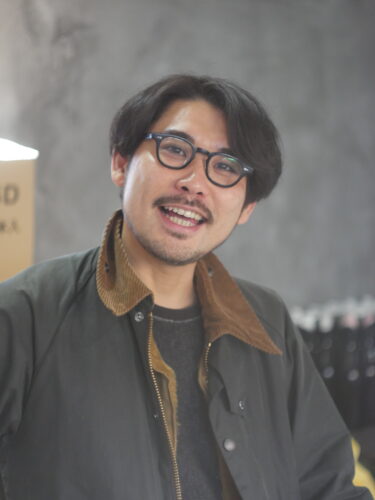
On the surface, it seems Tatsuya Motonaga has made it happen for himself and his family, blossoming from otaku to ikigai. As for the rest of us, well, at least we have his amaro.
How To Get At It

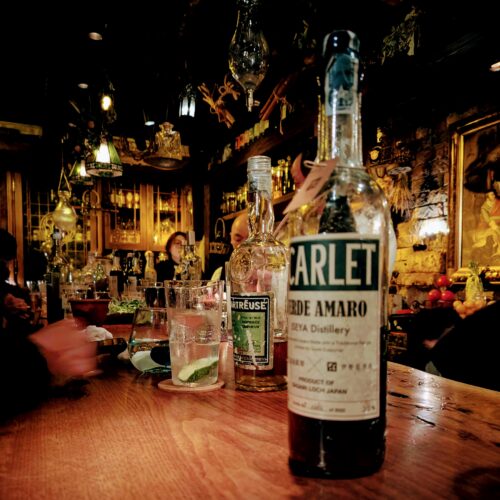
Unfortunately for you, most of Iseya’s truly exceptional bottles are only available in Japan as limited editions produced in collaboration with some of Japan’s other otaku from the industry, and seeking them out is one hell of a way to cut through the chaos and plan your own itinerary. In Kyoto, check out Bar Rocking Chair to see if they have any of his exclusive bottles in stock, or at Tokyo Riverside Distillery, where the gins are brewed from oddlots like expired ales and strange seaweeds, and botanicals grown right on their rooftop helped brew Iseya’s one-off “ethical” Scarlet.
Still, Iseya’s flagship line is appearing in bars and bottle shops all over the world, from Umami Mart and Prizefighter here in the East Bay, Amaro Brooklyn or Urban Wines in New York, or, if you’re lucky, my wet bar. Boost your Negroski with a finger of Scarlet Bitter—modeled off of prewar Campari, back when it was still colored naturally, with bugs—or your Paper Plane with Radice, a summery, Strega-like quaff flavored with black cumin, a spice from Hong Kong which Moto says is known to “cure everything except death.” If that’s your thing.